Beyond the Basics

Ecosystem Optimisers: From Growing to Optimising

Once your Food Ladder system is up and running, the next step is Optimisation. Modular add-ons let you fine-tune your greenhouse environment—mitigating stress, increasing crop quality, and moving from survival to thriving.

In high-tech agriculture, we don't just react to the weather; we anticipate it. Ecosystem Optimisers are modular upgrades that reduce manual workload and boost Brix levels (the sugar content in your fruit). For those without a Food Ladder, this page shows the sophisticated, "Lego-like" modularity you're missing out on.

1

Climate Control

The Cooling Suite

When the mercury rises, plants don't just get thirsty—they get stressed. If the air gets too hot, plants close their stomata (breathing pores) to save water, which stops growth entirely.

Evaporative cooling pads in a greenhouse

Evaporative Cooling

Evaporative cooling uses the Latent Heat of Vaporisation. By pulling warm air through wet cooling pads, the energy from the heat is used to evaporate the water—resulting in a significant drop in air temperature.

Think of it as a giant, high-tech sweat gland for your greenhouse.

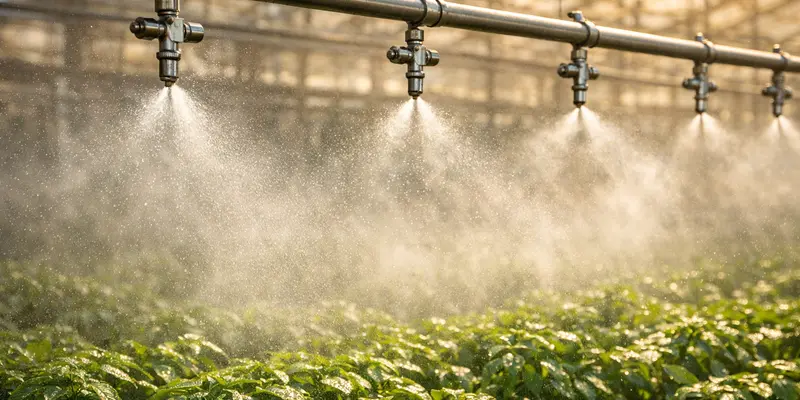
Misting nozzles cooling a greenhouse

Misting Systems

These release ultra-fine droplets that flash-evaporate in the air. This increases humidity and cools the environment without soaking the leaves—which can lead to mould.

Systems Engineer Note

Latent Heat of Vaporisation: When water evaporates, it absorbs energy from the surrounding air. That energy leaves with the water vapour, cooling the air. Evaporative pads exploit this principle—warm dry air enters, passes through wet media, and exits cooler and more humid.

Junior Grower Activity

The Greenhouse "Sweat"

Just like we sweat to stay cool when we run, the greenhouse uses water to "sweat" out the heat.

Try this: Have students wet one hand and wave it in the air while keeping the other dry. Which one feels colder? That's evaporative cooling!

2

Physical Architecture

Support Systems

Some of your most productive crops—tomatoes, cucumbers, melons—are climbers or heavy producers. Without support, they collapse under their own weight or sprawl across the floor, reducing airflow.

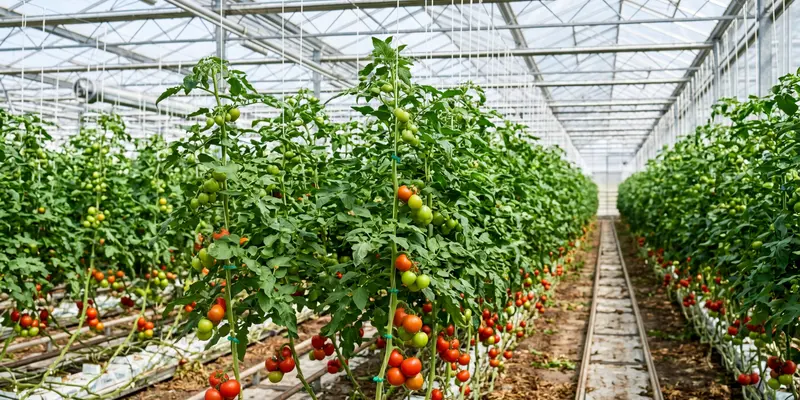
Tomato plants growing up trellis supports

Trellising & Mesh

These encourage vertical growth. By growing "up" instead of "out," you maximise PAR (Photosynthetically Active Radiation)—ensuring every leaf gets its fair share of sunlight.

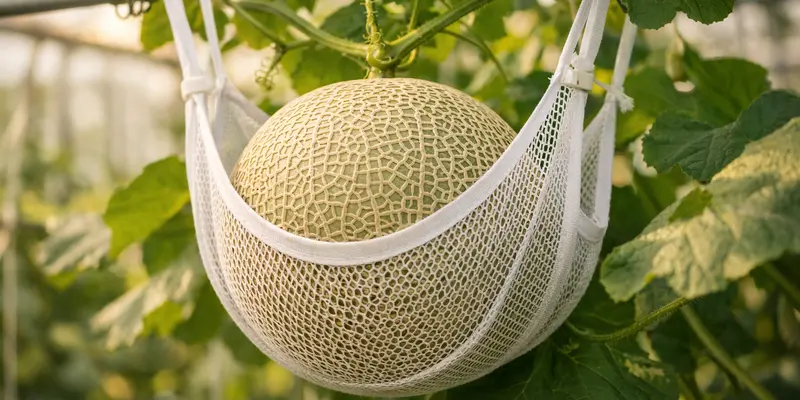
Melon supported in a fabric sling on a trellis

Fruit Slings

For heavy-hitters like melons. These cradles support the weight of the fruit so it doesn't snap the vine or pinch the xylem—the plant's internal water pipes.

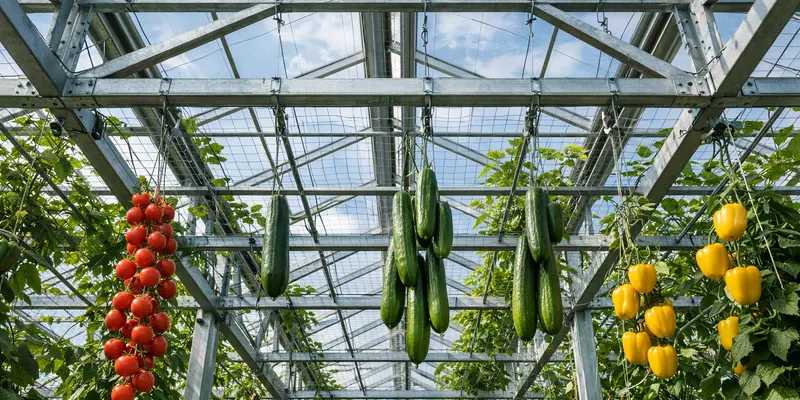
Produce hanging from engineered greenhouse mounting points

Point Loading

Food Ladder greenhouse frames are engineered for "Point Loading." You can hang hundreds of kilos of produce from the roof without the structure bending.

Food Ladder Advantage

Pre-engineered mounting points for every optimiser—no risky hacking or structural compromises. Food Ladder greenhouses are designed as a platform for these technologies from day one.

Junior Grower Activity

The Tallest Tower

Plants love to climb! By using a trellis, we give the plants a "ladder" to reach the sun.

Try this: Watch a vine over a week. How many "rungs" of the ladder did it climb?

3

Hydraulic Automation

The Set-and-Forget Suite

The most common point of failure in any system is "The Human Element." Automation removes the risk.

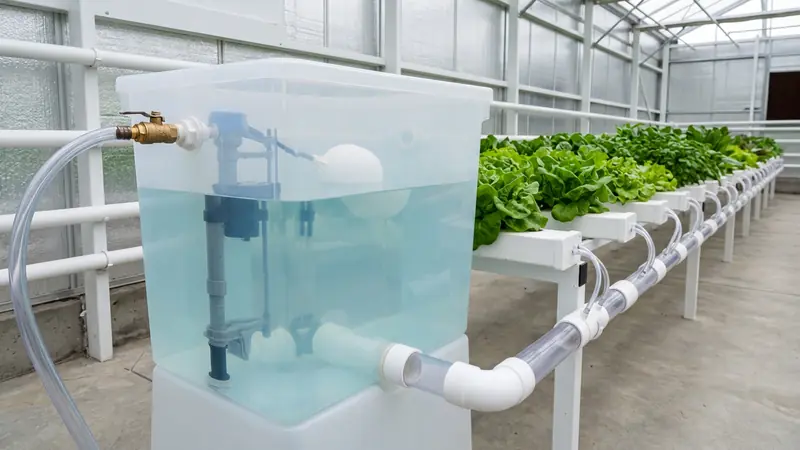
Float-fill valve maintaining nutrient tank water level

Float-Fill Nutrient Tank Top-Ups

A float-fill valve works like the mechanism in a toilet cistern. When the water level in your nutrient tank drops due to plant uptake, the valve opens automatically to refill it.

In an NFT system, nutrient concentration changes as plants drink. Rapid shifts can "shock" the roots. A float-fill keeps the system in equilibrium, providing a steady, stable environment for root uptake.

Systems Engineer Note

Osmotic equilibrium: Roots absorb nutrients best when the concentration gradient between the nutrient solution and the root cells remains stable. A float-fill valve maintains water level, so osmotic pressure stays consistent—preventing stress and maximising uptake.

4

Thermal Management

Nutrient Stability

The most overlooked part of a greenhouse is the temperature of the water.

Healthy white roots in nutrient-rich water

The Science

Oxygen is more soluble in cold water than warm water. If your nutrient tank gets too hot (above 24°C), Dissolved Oxygen (DO) levels plummet. This can lead to Root Hypoxia—where the roots literally suffocate.

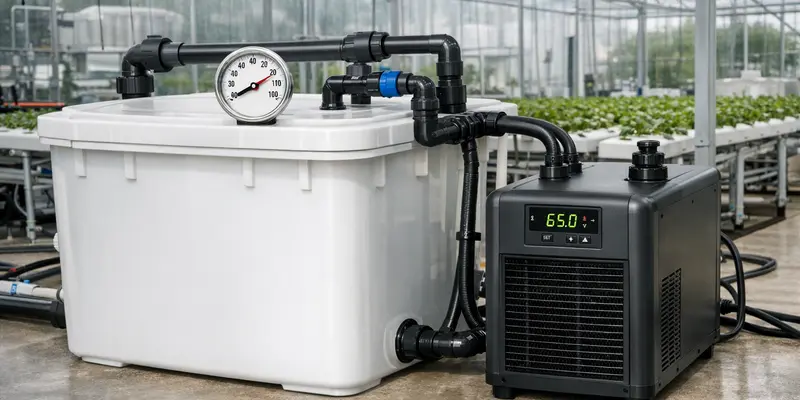
Nutrient tank with chiller unit in a greenhouse

The Fix

Nutrient tank chillers or reflective tank covers. By keeping the "soup" cool, you ensure roots stay white, healthy, and highly active—and you prevent pathogens like Pythium (root rot) from thriving.

Quick Reference

The Optimisation Matrix

Which accessory solves which environmental "pain point"? Here's your summary.

Upgrade The Problem The Scientific Result
Evaporative Pads Air is too hot/dry Lowered air temp via latent heat absorption
Fruit Slings Fruit is too heavy Prevents vascular damage to the vine
Float-Fill Valve Water levels fluctuating Stable osmotic pressure for the roots
Mesh/Trellis Poor light penetration Higher PAR efficiency and better airflow
Tank Cooling Low oxygen in water High DO levels; prevents Root Rot (Pythium)

Is Your Greenhouse "Modular"?

The beauty of a professional system like a Food Ladder is that it is modular. It grows with you. If you are using a standard soil garden or a basic DIY tunnel, adding these optimisers often requires "hacking" the structure—which can lead to leaks or collapses.

Food Ladder Advantage

A Food Ladder Academy-certified greenhouse is designed as a platform for these technologies. If you're noticing your plants wilting in the afternoon heat or your melons breaking their stems, it might be time to stop "gardening" and start Optimising.

Grow with Food Ladder at your school

Know another school that would love Food Ladder?

Our AI-powered onboarding builds a custom proposal for your school in minutes.

Point them to our AI onboarding—it helps schools build a custom greenhouse proposal in minutes.

Use AI to Get Started Share Onboarding Link

Powered by IBM