The Science
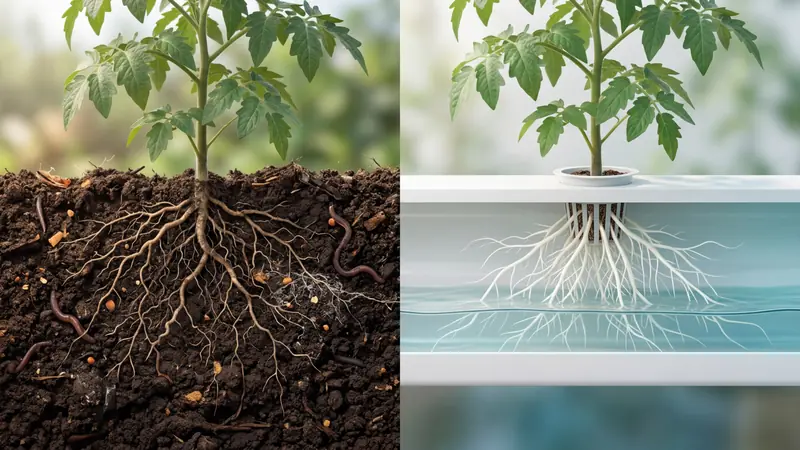
Soil utilises capillary action to move water to roots. It relies on a complex web of microbes and fungi to break down organic matter into minerals the plant can absorb.
Join our community of 5,000+ growers to access the Academy, track your harvest, and connect with other schools.
We'll open your email app with your message addressed to info@foodladder.org. Send it from there to reach our team.
Update your name and email preferences.
We couldn't load your details. Please try again.
The Evolution of Agriculture
Agriculture is no longer just about seeds and rain. It is about System Design. We manage the "Big Four": Light, Water, Nutrients, and Oxygen. Different systems prioritise these variables in different ways—from passive farming to active engineering.
Whether you are using a pot on a windowsill or a high-tech Food Ladder greenhouse, you are acting as the "Controller" of a biological machine.
Tier 1
The most traditional method—the "Old Faithful." Here, the soil acts as a buffer. It holds onto nutrients and water, releasing them slowly over time.
Soil utilises capillary action to move water to roots. It relies on a complex web of microbes and fungi to break down organic matter into minerals the plant can absorb.
Best for root vegetables (carrots, potatoes) and large perennial bushes that need deep structural support.
Systems Engineer Note
Osmotic pressure drives water uptake in roots: water moves from areas of lower solute concentration into the root cells where minerals are concentrated. In soil, roots must "hunt" for this gradient; in hydroponics, we deliver it directly.
The Challenge: Soil can be unpredictable. It harbours pests, requires constant weeding, and loses massive amounts of water to evaporation.
Junior Grower Activity
Think of soil like a big pantry. It stores the "snacks" (nutrients) for the plants. But sometimes, the pantry is hard to reach! In a Food Ladder, we bring the snacks directly to the plant's door.
Look for this: Can you spot worms or bugs in healthy soil? They're part of the "kitchen crew" breaking down old plant matter into food.
Tier 2
Hydroponics removes the "middleman" of soil. By delivering nutrients directly in water, we can "overclock" plant growth.
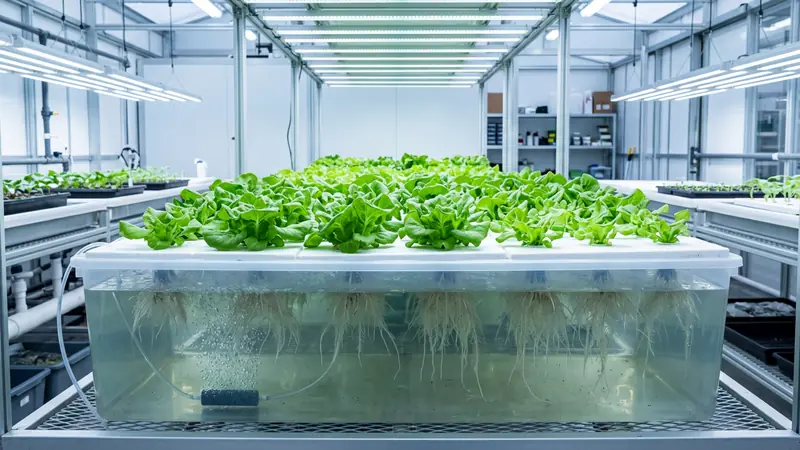
Plants float on a raft with roots dangling in a tub of nutrient-rich water.
Relies on dissolved oxygen. If the water isn't bubbled with air stones, the roots will drown.
Short-term crops like lettuce.
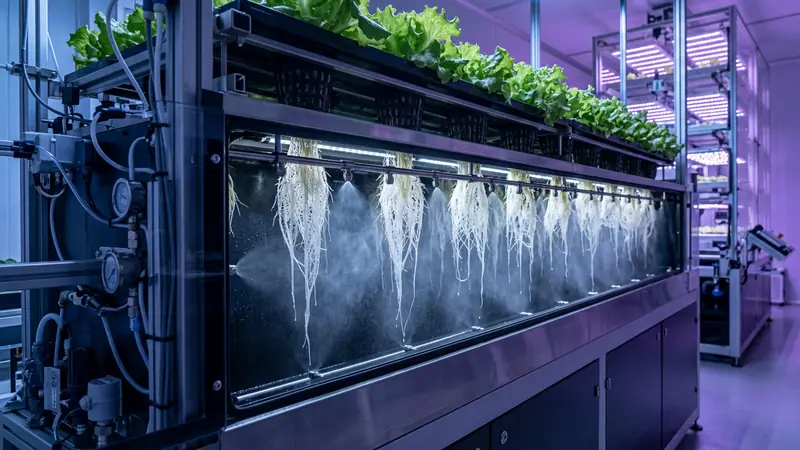
Roots hang in the air and are misted with nutrients every few minutes.
Provides the highest level of oxygen to the roots, leading to explosive growth.
Extremely high-tech and prone to failure if the power goes out for even 10 minutes.
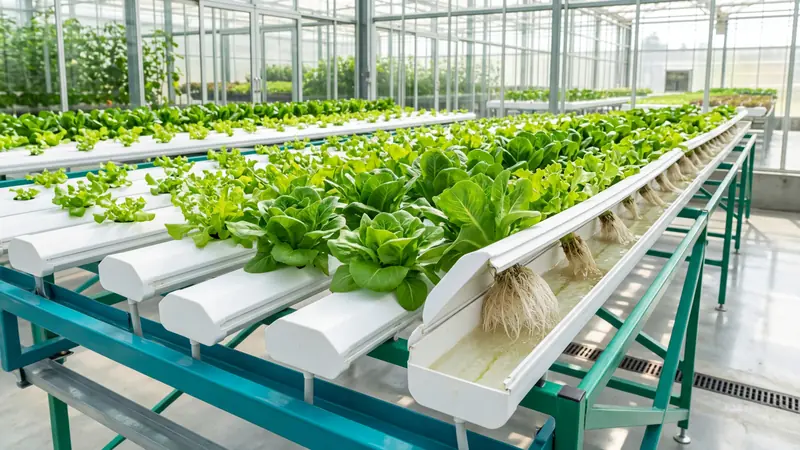
A constant, thin "film" of nutrient water flows over the roots in a sloped channel.
Creates a "double-access" zone. The bottom of the root drinks the nutrient water, while the top is exposed to fresh air for maximum oxygen uptake.
Leafy greens, herbs, and fast-cycling crops in compact spaces.
Food Ladder Advantage
The "Goldilocks" system—more reliable than Aeroponics, far cleaner than soil. 10× growth in the same footprint with 90% less water, producing professional-grade crops where traditional farming fails.
Tier 3
How do we feed 8 billion people? Broad-acre farming and large-scale greenhouse operations.
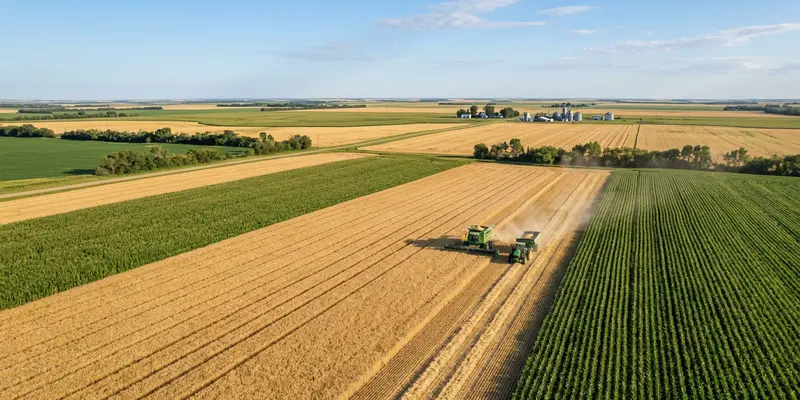
Using GPS-guided tractors and satellites to manage thousands of hectares of crops (wheat, corn, soy). Optimised for volume and economies of scale.
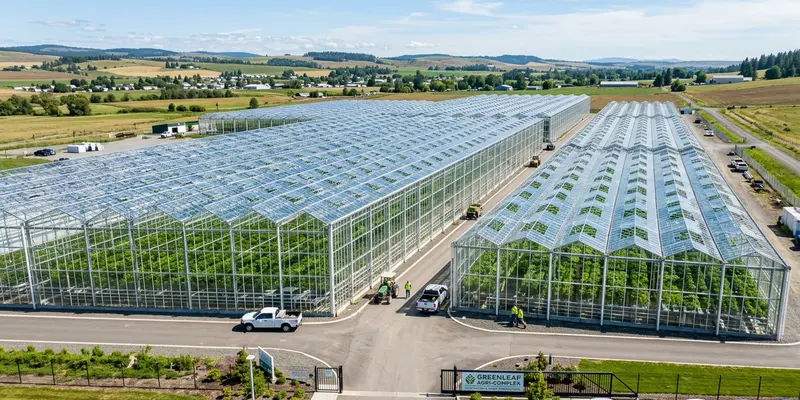
Commercial hydroponic and controlled-environment operations. High capital, labour, and expertise. Built for the food supply chain.
Tier 4
The cutting edge: AI, IoT, and Vertical Farming.
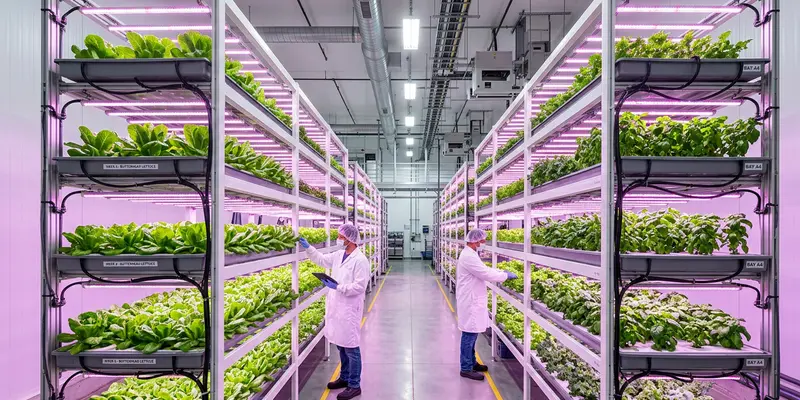
Growing in "skyscrapers" using LED light recipes instead of the sun. IoT sensors monitor every leaf's temperature and health in real-time.
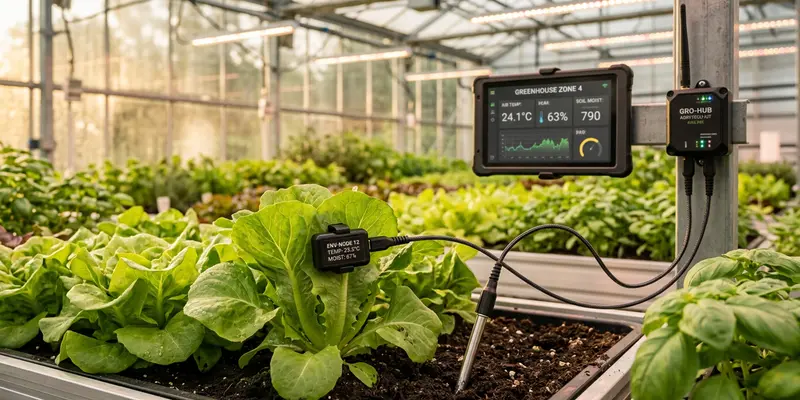
Internet of Things sensors track humidity, light, nutrient levels, and more. Data flows to dashboards for precision control.
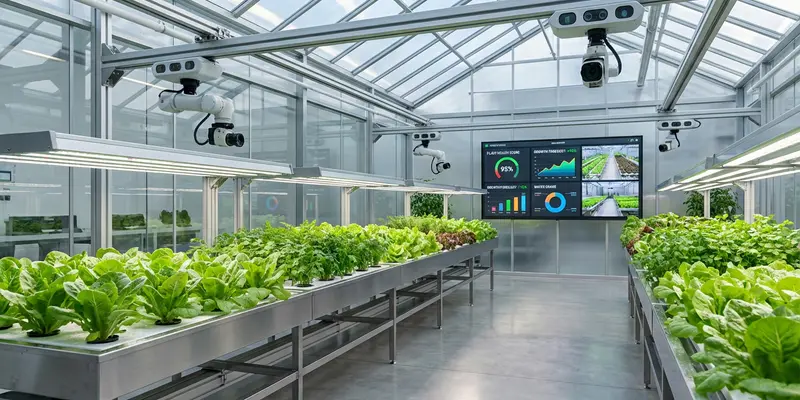
Modern systems use AI to predict when a plant will be thirsty before it starts to wilt. Machine learning optimises harvest timing.
Systems Engineer Note
The pH scale (0–14) measures acidity. Most hydroponic crops thrive at pH 5.5–6.5. Outside this range, nutrients "lock out"—they're present in the water but chemically unavailable to roots. Food Ladder systems make pH monitoring simple.
Quick Reference
A side-by-side comparison to help choose the right system for your needs.
| Feature | Soil / Raised Beds | Deep Water Culture | Food Ladder (NFT) |
|---|---|---|---|
| Water Efficiency | Low (high evaporation) | Medium (standing water) | High (recirculating) ✓ |
| Growth Speed | Standard | Fast | Accelerated ✓ |
| Space Required | High | Medium | Ultra-low (vertical) ✓ |
| Pest Control | Difficult (soil-borne) | Easier | Superior (clean system) ✓ |
| Learning Curve | Easy | Medium | Professional / engaging ✓ |
If you are at a school with a Food Ladder, you are operating a Tier 2 high-performance system. You have the power to control the pH and EC (Electrical Conductivity) of your water to change how your food tastes.
If you are at a school without one yet, you can still experiment with Tier 1 soil pots. You'll quickly see the difference in how much work it takes to keep a plant happy when you have to provide the "system" manually every day.
Food Ladder Advantage
Our NFT greenhouses produce professional-grade crops in environments where traditional farming fails. 90% less water, 10× growth in the same footprint, and a clean system that's perfect for schools.
Junior Grower Activity
Roots are like tiny drinking straws. In soil, they have to grow long and "hunt" for a drink. In our hydroponic systems, the drink is always right there!
Try this: Can you see the white roots "drinking" in the channels? Compare them to roots from a potted plant—notice how different they look!
Every system needs a "Manager." Whether you are weeding a garden bed or checking the pump in an NFT system, consistency is key. Always ensure your water is clean and your tools are sterilised to prevent biofilms—slimy bacteria that can clog up your high-tech highway.
Our AI-powered onboarding builds a custom proposal for your school in minutes.
Point them to our AI onboarding—it helps schools build a custom greenhouse proposal in minutes.
Use AI to Get Started Share Onboarding LinkPowered by IBM