Biosecurity & IPM

Pest Management: Know the Enemy

Australian greenhouses face a unique set of hitchhikers. Learn to identify them early, understand how they operate, and deploy science-backed prevention strategies before they become a crisis.

A Food Ladder greenhouse is a sealed, controlled environment—but no system is impenetrable. Pests arrive on clothing, through open doors, on new seedlings, and even through ventilation. The difference between a minor sighting and a full-blown infestation is speed of identification and a solid Integrated Pest Management (IPM) strategy.

1

The Sap-Suckers

Silent Vampires

These insects pierce plant cells with needle-like mouthparts and drain the sap. The damage is often invisible until the colony is established. They also excrete honeydew—a sticky residue that attracts sooty mould.

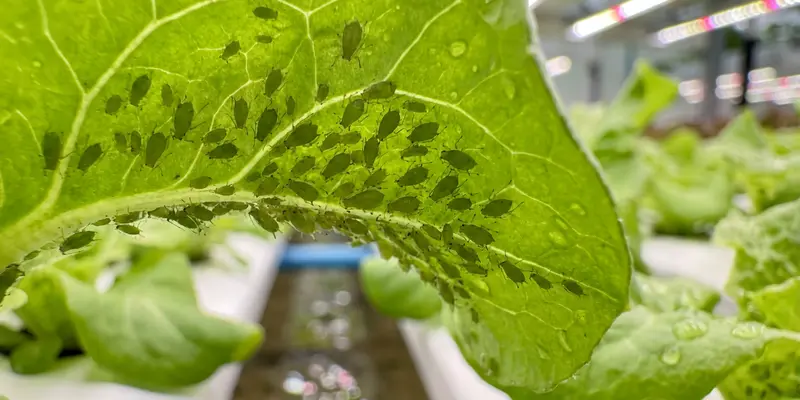
Green aphids clustered on the underside of a lettuce leaf

Aphids

The most common greenhouse pest in Australia. Green Peach Aphids (Myzus persicae) and Cotton Aphids (Aphis gossypii) reproduce explosively—a single female can produce 80 offspring in a week without mating.

LOOK FOR Clusters on leaf undersides, curling new growth, sticky honeydew on lower leaves
RISK Transmit plant viruses (CMV, PVY) between crops as they feed
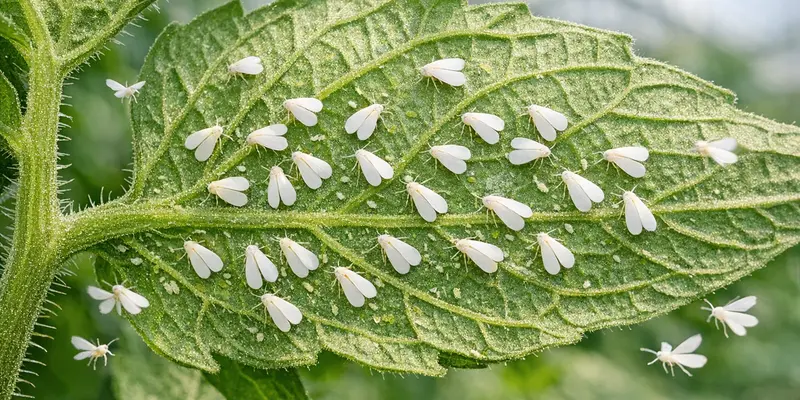
Whiteflies on the underside of a tomato leaf

Whitefly

Silverleaf Whitefly (Bemisia tabaci) is Australia's most damaging whitefly species. Adults are tiny (1–2 mm), white-winged, and fly up in clouds when disturbed. Eggs are laid on leaf undersides in circular patterns.

LOOK FOR White "clouds" when plants are shaken, yellowing leaves, sticky residue
RISK Vector for Tomato Yellow Leaf Curl Virus (TYLCV), devastating for tomato crops
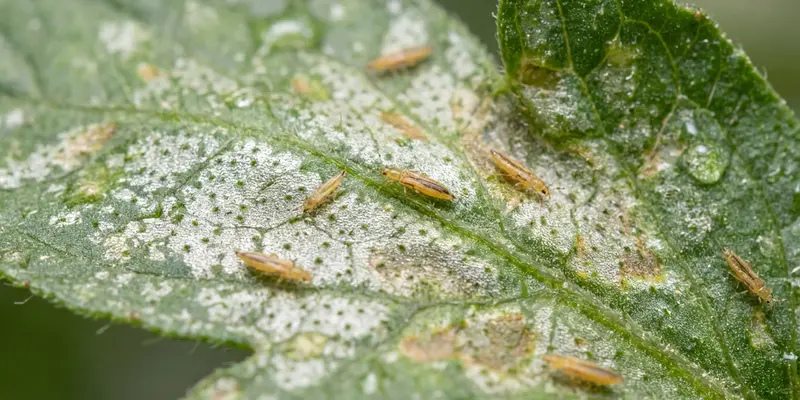
Western flower thrips on a damaged leaf showing silvery scarring

Thrips

Western Flower Thrips (Frankliniella occidentalis) are barely visible at 1–2 mm. They rasp the leaf surface with asymmetric mouthparts, creating characteristic silvery scarring and black frass (droppings).

LOOK FOR Silvery streaks on leaves, deformed flowers, tiny dark specks of frass
RISK Transmit Tomato Spotted Wilt Virus (TSWV)—one of the most destructive plant viruses globally

Systems Engineer Note

Honeydew & Sooty Mould: When sap-sucking insects feed, they excrete excess sugars as "honeydew." This sticky residue coats leaf surfaces and becomes a growth medium for Capnodium fungi (sooty mould), which blocks photosynthesis—essentially blinding the leaf. In a recirculating NFT system, early detection is critical because honeydew can also contaminate the nutrient solution.

2

Mites, Gnats & Chewers

The Destroyers

These pests attack from different angles—mites drain cells from below, gnats devour roots, and caterpillars chew through foliage at alarming speed. All thrive in the warm, protected conditions of a greenhouse.

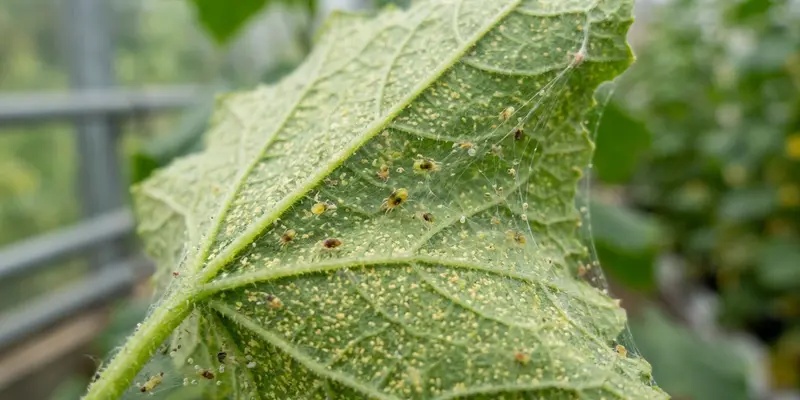
Two-spotted spider mites and webbing on a cucumber leaf

Two-Spotted Mites

Tetranychus urticae—not insects but arachnids. At 0.5 mm they're nearly invisible, but their damage isn't. They puncture individual cells and drain the contents, leaving a stippled, bronze appearance. In hot, dry conditions they can double their population every 3 days.

LOOK FOR Fine webbing on leaf undersides, yellow stippling, bronze/dry patches
RISK Explosive population growth in warm greenhouses; can defoliate a crop in weeks
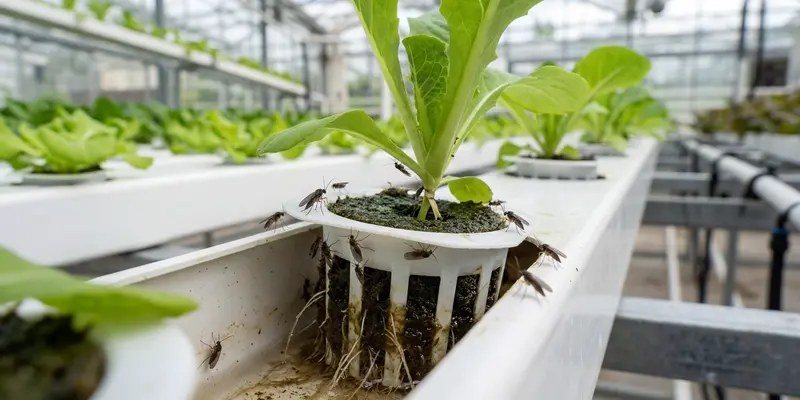
Fungus gnats near the base of hydroponic lettuce

Fungus Gnats

Bradysia species. The adults are harmless nuisance fliers, but their larvae are the real problem. They feed on root hairs, organic matter, and algae in the root zone—creating entry wounds for pathogens like Pythium and Fusarium.

LOOK FOR Small dark flies hovering near media/root zone, wilting seedlings, damaged root tips
RISK Larvae create root wounds that allow deadly water-moulds into the NFT system
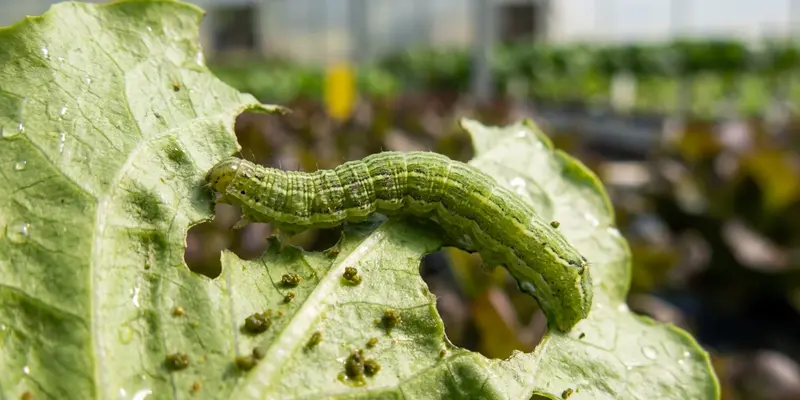
Helicoverpa caterpillar feeding on a greenhouse leaf

Caterpillars

Heliothis (Helicoverpa armigera) and Diamondback Moth (Plutella xylostella) are Australia's most destructive greenhouse caterpillars. Adults lay eggs on leaves; larvae consume entire leaf sections and can bore into fruit.

LOOK FOR Ragged holes in leaves, dark frass pellets, curled leaves hiding larvae
RISK A single caterpillar can consume 30 cm² of leaf per day—devastating for leafy crops

Australian Context: Australia's warm climate means many of these pests are active year-round, unlike temperate regions where winters provide a natural "reset." In Queensland and Northern NSW, two-spotted mites can complete a full generation in just 5 days during summer—making vigilance non-negotiable.

Junior Grower Activity

Bug Detective

Grab a magnifying glass and go on a "Bug Hunt" in the greenhouse. Check the undersides of 10 leaves and record what you find. Are they friends (ladybugs, lacewings) or foes (aphids, whitefly)?

Try this: Place a piece of white paper under a leaf and gently tap. Tiny dots that start moving are likely mites!

3

Integrated Pest Management

Your Defence Toolkit

IPM is a layered strategy: prevent entry, detect early, and respond proportionally. In a Food Ladder greenhouse, we never reach for chemical sprays first—we build a fortress and deploy nature's own soldiers.

Physical Barriers

The first line of defence. Insect-proof mesh on all vents and doors (0.15 mm aperture stops thrips—the smallest common pest). Double-door airlocks prevent fly-through entry. Foot baths at entry points kill soil-borne spores on shoes.

Effectiveness

Blocks 95%+ of pest entry when properly maintained

Monitoring & Traps

Yellow sticky traps catch whitefly, fungus gnats, and winged aphids. Blue sticky traps target thrips specifically. Place traps at canopy height, one per 10 m² of growing area. Check and record counts weekly—trends matter more than individual numbers.

Pro Tip

A sudden spike on sticky traps = something has breached your barriers

Biological Control

Nature's hit squad. Release beneficial predators that eat the pests. Ladybirds and Lacewing larvae devour aphids. Persimilis mites (Phytoseiulus persimilis) hunt two-spotted mites. Encarsia wasps parasitise whitefly.

Key Principle

Release beneficials early and preventatively—not as a rescue mission

Food Ladder Advantage

A Food Ladder greenhouse is engineered for IPM from day one—insect mesh on every opening, sealed door systems, and smooth non-porous surfaces that eliminate hiding spots. Combined with the NFT system's soilless environment, your pest pressure is a fraction of what outdoor or soil-based growers face.

Systems Engineer Note

The IPM Pyramid: Think of pest management as a pyramid. The base (widest layer) is Prevention—physical barriers, hygiene, clean seedlings. The middle layer is Monitoring—sticky traps, weekly scouting. The narrow top is Intervention—biological control or, as a last resort, targeted organic sprays. The wider your base, the less you need the top.

4

Early Warning System

Red Alert: Spot It Early

Most infestations are invisible for the first 7–10 days. By the time you see obvious damage, the colony is already established. Train your eye to spot these early warning signs during weekly scouting walks.

Warning Sign

Sticky Leaves

What it means: Honeydew excretion from aphids, whitefly, or mealybugs. Check leaf undersides immediately.

Warning Sign

Silvery Streaks

What it means: Thrips feeding damage. The silver appearance is caused by empty, air-filled cells where sap has been drained.

Warning Sign

Fine Webbing

What it means: Two-spotted mite colony. By the time webbing is visible, the population is already large. Act immediately.

Warning Sign

Wilting Seedlings

What it means: Fungus gnat larvae attacking root tips. Check the growing media for small, translucent larvae (3–5 mm).

The 48-Hour Rule: In a warm Australian greenhouse, most pest populations can double every 3–5 days. If you spot a pest on Monday, by Friday the population could be 4× larger. The window between "manageable" and "crisis" is measured in days, not weeks. Scout weekly—act within 48 hours of any detection.

5

Quick Reference

The Pest Matrix

Which pest, what damage, and how to fight back—at a glance.

Pest Primary Damage Detection Method Best Defence
Aphids Sap drain, virus transmission Visual check of leaf undersides Ladybirds, Lacewings
Whitefly Sap drain, TYLCV vector Yellow sticky traps Encarsia wasps, mesh screening
Thrips Cell rasping, TSWV vector Blue sticky traps Predatory mites (Cucumeris)
Two-Spotted Mite Cell puncture, defoliation Hand lens on leaf undersides Persimilis mites, humidity control
Fungus Gnats Root damage, pathogen entry Yellow sticky traps near base Hypoaspis mites, dry surfaces
Caterpillars Leaf & fruit consumption Visual check for frass & holes Bt spray (Bacillus thuringiensis)

Australian Seasonal Pest Calendar

🌸 Spring (Sep–Nov)

Aphid populations explode as temperatures rise. Whitefly begin migrating indoors. Deploy sticky traps and release ladybirds early.

☀️ Summer (Dec–Feb)

Peak pressure. Two-spotted mites thrive in hot, dry conditions. Thrips reach maximum activity. Caterpillar moths are most active at dusk.

🍂 Autumn (Mar–May)

Pest pressure eases but doesn't stop. Fungus gnats increase as humidity rises. Deep clean and reset biological controls.

❄️ Winter (Jun–Aug)

Lowest pressure, but greenhouses stay warm. Aphids and whitefly can persist year-round indoors. Maintain monitoring—don't drop your guard.

Junior Grower Activity

The Pest Patrol Log

Create a weekly "Pest Patrol" chart for the greenhouse wall. Each student checks 5 plants and draws what they find. Over time, you'll build a real dataset showing pest trends across the seasons—that's real science!

Protect your greenhouse from day one

Know another school that would love Food Ladder?

A Food Ladder greenhouse is engineered for biosecurity and integrated pest management.

Point them to our AI onboarding—it helps schools build a custom greenhouse proposal in minutes.

Use AI to Get Started Share Onboarding Link

Powered by IBM